
LED Lighting Upgrades: Benefits, Costs, Energy Savings, Rebates

LED lighting upgrades represent one of the most impactful investments a property owner can make, transforming outdated lighting systems into modern, energy-efficient solutions that deliver substantial cost savings, superior performance, and environmental benefits. An LED upgrade involves replacing traditional incandescent, halogen, or fluorescent bulbs with advanced Light Emitting Diode technology that consumes 30–50% less electricity while producing equal or better illumination, with lifespans reaching 50,000 hours compared to just 1,000 hours for conventional bulbs. The benefits extend far beyond energy savings—LEDs convert 95% of their energy into light rather than heat, reducing cooling costs and fire risks, while offering superior color accuracy with CRI values above 80-90, which enhance visibility in workspaces, retail environments, and homes.
Property owners should prioritize upgrades when using outdated bulbs, facing rising energy costs, undergoing renovations, dealing with frequent maintenance, or experiencing poor lighting quality and safety concerns. LED upgrades come in multiple forms, including retrofit kits that modernize existing fixtures, complete fixture replacements for maximum efficiency, simple bulb swaps for immediate savings, smart systems with automated controls, and outdoor solutions for parking lots and security lighting. With utility rebates and federal tax deductions offsetting 20-50% of expenses and accelerating payback periods to mere months.
Successfully upgrading requires assessing current systems, setting budgets with available incentives, selecting appropriate products based on lumens and color temperature, and executing professional installation with proper controls to maximize return on investment and long-term energy efficiency.
What Is an LED Lighting Upgrade?
An LED lighting upgrade is the process of replacing outdated lighting systems with modern LED (Light Emitting Diode) technology. It involves removing older bulbs such as incandescent, halogen, or fluorescent lights and installing energy-efficient LED fixtures that deliver equal or better illumination while using significantly less power.
LED upgrades improve both energy efficiency and lighting quality. Because LEDs convert most of their energy into light instead of heat, they waste less electricity and reduce utility costs. They also have a much longer lifespan—often 50,000 hours or more—which lowers maintenance and replacement needs.
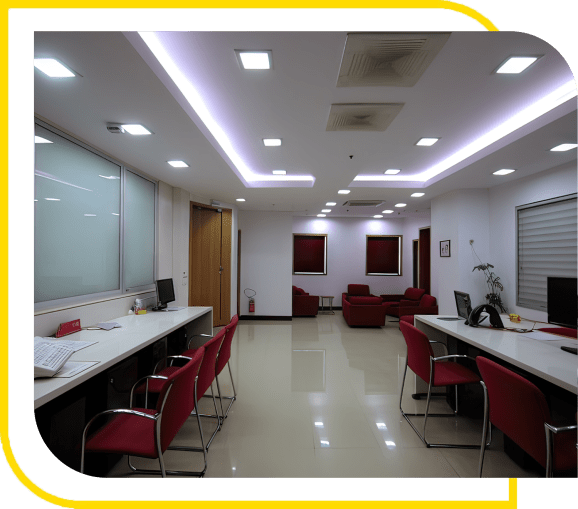
Upgrades can be as simple as retrofit bulb replacements or as comprehensive as complete lighting system redesigns, depending on the building’s condition and lighting objectives. Businesses, municipalities, and homeowners often choose LED upgrades to cut energy consumption, enhance lighting control, and reduce environmental impact through lower carbon emissions.
In essence, an LED lighting upgrade is a smart investment in sustainability, efficiency, and long-term cost savings.
What Are the Benefits of LED Lighting Upgrades?
1. Dramatic Energy Savings
LED lighting upgrades deliver substantial energy savings by consuming 30-50% less electricity than incandescent bulbs and up to 50% less than fluorescent tubes, translating directly into lower utility bills that compound monthly over the bulb’s lifetime. A single 60-watt incandescent bulb replaced with a 9-watt LED saves approximately 51 watts per hour, which, over 10,000 hours of use, equals 510 kWh of electricity—enough to power a refrigerator for several months.
2. Exceptional Lifespan and Longevity
The exceptional lifespan of LEDs—ranging from 15,000 to 50,000 hours compared to 1,000 hours for incandescent and 8,000 hours for fluorescent bulbs—drastically reduces replacement frequency, cutting both labor costs and the ongoing expense of purchasing new bulbs. If you use a light for 8 hours daily, a 25,000-hour LED lasts over 8 years without replacement, whereas you’d need to replace an incandescent bulb 25 times during that same period.
3. Superior Energy Efficiency and Reduced Heat
LEDs convert electricity to light far more efficiently than traditional lighting, with 95% of their energy producing light and only 5% wasted as heat, whereas incandescent bulbs waste 90% of their energy as heat, making LEDs safer to touch and reducing cooling costs in air-conditioned spaces. This efficiency means your HVAC system works less to counteract heat from lighting fixtures, creating a secondary layer of energy savings that many people overlook.
4. High-Quality Light and Color Accuracy
Superior light quality represents a major advancement, as modern LEDs offer high Color Rendering Index (CRI) values above 80-90 that accurately display colors as they appear in natural sunlight, enhancing visibility in workspaces, retail environments, and homes while reducing eye strain. High CRI lighting proves especially critical in settings like art galleries, clothing stores, medical facilities, and kitchens, where accurate color perception directly impacts functionality and user experience.
5. Financial Incentives and Rebates
Financial incentives and rebates from utility companies and government programs often offset 20-50% of LED upgrade costs, accelerating payback periods and making the transition more economically attractive for commercial property owners. These programs recognize that reducing lighting demand benefits the entire electrical grid by lowering peak load requirements, preventing brownouts, and delaying the need for expensive infrastructure upgrades.
6. Environmental Sustainability
Environmental benefits include zero mercury content (unlike fluorescent bulbs that require special disposal), reduced carbon emissions from lower electricity demand, and minimal UV radiation output that prevents fading of furniture, artwork, flooring, and merchandise. The reduced power consumption also decreases demand on power plants, lowering the environmental footprint of your lighting by reducing fossil fuel consumption and greenhouse gas emissions at the generation source.
When Should You Upgrade to LED Lighting?
Upgrading to LED lighting should be a priority when your current system wastes energy, increases maintenance costs, or delivers poor performance. Here are the five main situations when an LED upgrade makes the most sense.
1. When Using Outdated or Inefficient Bulbs
If your lighting system still relies on incandescent, halogen, or fluorescent bulbs, upgrade immediately. These technologies waste most of their energy as heat and consume up to 80% more electricity than LEDs. Replacing them with LEDs provides instant savings and typically pays for itself within a few months, especially for fixtures that operate several hours each day.
2. When Energy Costs Are Rising
A steady increase in electricity bills is a clear signal to switch. LED lighting reduces power consumption by 50–80%, locking in permanent energy savings that protect against future utility rate hikes. The more electricity costs rise, the greater the financial return from switching to LED technology.
3. During Renovations, Construction, or Major Upgrades
Renovation or construction projects are the perfect time to upgrade. Electrical systems are already being updated, which allows LED fixtures, sensors, and smart controls to be installed efficiently and cost-effectively. New building codes also favor LED lighting for energy compliance and sustainability certification.
4. When Maintenance Becomes Frequent or Costly
If bulbs burn out often or require specialized equipment for replacement, such as lifts or scaffolding, it is time to upgrade. LEDs last 15,000 to 50,000 hours, minimizing maintenance for years. This is especially valuable in facilities with high ceilings, 24-hour operations, or hard-to-reach fixtures.
5. When Lighting Quality or Safety Is Poor
Poor light quality, flickering, or excessive heat are signs that older lighting systems are inefficient or unsafe. LED lights provide consistent brightness, accurate color rendering, and low operating temperatures, eliminating fire risks and improving visibility, comfort, and overall safety in every environment.
What Are the Types of LED Lighting Upgrades?
LED lighting upgrades come in several types, each designed to improve efficiency, lighting quality, and cost-effectiveness depending on the building’s age, layout, and existing fixtures. Choosing the right upgrade type ensures maximum energy savings, reduced maintenance, and optimal performance.
1. LED Retrofit Upgrades
A retrofit upgrade replaces traditional bulbs or internal components within existing fixtures with LED retrofit kits or compatible lamps. This method keeps the current fixture housing but modernizes its light source. It is cost-effective, quick to install, and ideal for spaces where the fixture design is still functional or aesthetically important. Retrofit upgrades are common in offices, schools, warehouses, and retail stores because they minimize downtime while improving light quality and reducing power consumption.
2. Full Fixture Replacement Upgrades
A fixture replacement upgrade involves removing old lighting fixtures entirely and installing new, purpose-built LED fixtures. This approach delivers the highest efficiency and performance since the entire system is engineered for LED technology, including optics, heat management, and smart controls. Full replacements are best suited for aging infrastructure, commercial retrofits, or new construction projects that demand modern aesthetics and maximum energy efficiency.
3. LED Tube or Bulb Replacement Upgrades
A tube or bulb replacement is the simplest form of LED upgrade. It involves swapping traditional lamps—such as fluorescent tubes or incandescent bulbs—with LED equivalents (like T8 LED tubes or A19 LED bulbs). These replacements require minimal effort and instantly cut energy use by up to 80%, making them ideal for homes, small offices, and retail spaces seeking immediate cost savings.
4. Smart LED Lighting Upgrades
Smart LED upgrades integrate LED fixtures with intelligent controls such as motion sensors, dimmers, daylight harvesting, and wireless automation systems. These systems allow lighting to adjust automatically based on occupancy or ambient light levels, reducing energy waste and enhancing user comfort. Smart upgrades are common in modern offices, warehouses, and public facilities where efficiency and control are top priorities.
5. Outdoor and Specialty LED Upgrades
Outdoor and specialty upgrades focus on replacing high-intensity discharge (HID) lamps, sodium vapor lights, or halogen floodlights with durable, weather-resistant LED fixtures. These systems provide powerful illumination for parking lots, street lighting, signage, and security applications while cutting energy use by more than 60% and reducing maintenance in hard-to-access areas.
How Much Do LED Lighting Upgrades Cost?
When considering an upgrade to LED lighting, costs vary widely based on the scope of work, type of property, and installation complexity. Here’s a breakdown of typical costs, what influences them, and what you might expect in different settings.
Typical Cost Ranges
- For a more comprehensive home lighting upgrade (fixtures + controls + labor), a typical range is US $1,200 to US $2,800 for a ~2,000 sq ft home.
- For commercial buildings, expect to pay US $2.00 to US $3.00 per square foot for retrofit upgrades and US $3.20 to US $4.00 per square foot for new installations.
- For large‐scale industrial or exterior upgrades, costs of US $200–US $400 per fixture are common in industry reports.
Major Cost Components
- Fixtures & Bulbs: Prices for LED bulbs typically range from US $4–US $8 for standard replacements.
- Labor & Installation: Labor costs vary by region and complexity. For recessed LED fixtures, installation can run US $100–US $300 per fixture, including labor.
- Electrical Upgrades & Controls: Older buildings may require wiring or panel upgrades. Adding smart lighting controls such as sensors or dimmers can increase overall costs.
Scale & Usage: High‐usage facilities—such as those with 24/7 operations or high ceilings—generally have higher fixture and labor costs due to installation challenges.
How Do LED Lights Save Energy?
LED lights save energy by using advanced semiconductor technology to convert electricity directly into visible light with minimal waste. Traditional bulbs like incandescent and halogen lights produce light by heating a filament, which wastes up to 90% of energy as heat. LEDs, on the other hand, emit light through electroluminescence, where electrons pass through a microchip and generate light instantly. This process is far more efficient, using nearly all the electrical power for illumination rather than heat production.
Because of this design, LEDs require much less wattage to produce the same brightness (lumens) as older bulbs. For instance, a 10-watt LED produces the same amount of light as a 60-watt incandescent bulb, cutting energy use by over 80%. LEDs also maintain efficiency across dimming levels and do not lose performance over time, ensuring consistent savings throughout their lifespan.
Are LED Lights More Energy Efficient?
Yes. LED lights are significantly more energy efficient than incandescent, halogen, or fluorescent bulbs. On average, LEDs convert 90–95% of the electricity they use into light, wasting only a small fraction as heat. In contrast, incandescent bulbs convert only 10% into light and lose the rest as heat energy.
How Much Do LED Lights Save Electricity Per Month?
Monthly savings from LED lights depend on the number of fixtures, daily usage, and electricity rates. On average, switching from incandescent bulbs to LEDs can reduce lighting-related electricity consumption by 70–80%.
For example:
- Replacing 10 incandescent bulbs (60 watts each) with 10 LEDs (9 watts each) used for 5 hours daily saves about 55 kWh per day, or 76.5 kWh per month.
- At an average electricity rate of $0.15 per kWh, that’s roughly $11.50 in savings per month, or about $138 per year—from just 10 bulbs.
Multiply that across an entire office, or warehouse, and the savings become substantial. Over their 10–15 year lifespan, LEDs not only lower energy bills but also reduce maintenance and replacement costs, delivering a high return on investment while minimizing environmental impact.
What Are LED Lighting Rebates and Incentives for Businesses?
LED lighting rebates and incentives for businesses are financial programs provided by utility companies, state and federal governments, and energy agencies. These programs help offset the upfront cost of transitioning to energy-efficient LED lighting while reducing overall energy demand on the power grid.
Utility Company Rebate Programs

Utility company rebate programs are available across most of the United States, covering approximately 77% of the country. These programs provide direct financial incentives to reduce energy consumption and improve grid stability. Rebates typically range from $2 to $25 per LED bulb or fixture, and $20 to $150 for larger fixtures such as LED troffers or high-bay lights.
There are three main types of utility rebates:
- Point-of-Sale (POS) Rebates: Applied instantly at purchase, requiring no waiting period.
- Prescriptive Rebates: Predefined incentives for approved LED products that meet set performance standards.
- Custom Rebates: Tailored to specific projects and energy savings but require engineering analysis and approval.
Many utilities, such as Duke Energy and TVA EnergyRight, offer tiered rebate structures rewarding high-efficiency projects and larger installations. Facilities replacing outdated high-intensity discharge (HID) lamps or metal halide fixtures often receive the highest incentives due to their significant energy-saving potential. Businesses upgrading multiple fixtures—especially in warehouses, parking lots, or large offices—can save thousands of dollars in combined rebates and reduced energy bills.

Federal Tax Deductions (Section 179D)
The Section 179D Energy Efficient Commercial Buildings Deduction allows property owners to claim tax deductions for installing qualified energy-efficient systems, including LED lighting. For projects that meet prevailing wage and apprenticeship standards, deductions range from $2.50 to $5.00 per square foot, depending on total energy savings achieved. Projects that do not meet these standards still qualify for $0.50 to $1.00 per square foot deductions.
LED lighting qualifies under Section 179D when it achieves a 25–40% reduction in lighting power density compared to ASHRAE 90.1 standards. Large facilities such as warehouses often need to meet a 50% reduction threshold to qualify. Designers, architects, and engineers working on energy-efficient systems in tax-exempt buildings—such as schools, government facilities, and tribal properties—can also receive allocated deductions.
For example, a 50,000-square-foot commercial facility can receive between $25,000 and $250,000 in deductions depending on the level of energy savings achieved.
State and Local Government Programs

Many states offer additional incentive programs that complement federal and utility rebates. Northeastern states such as New York, Massachusetts, and Pennsylvania provide robust commercial and industrial rebate structures. Midwest and Northwest states including Illinois, Michigan, and Washington offer simplified approval processes, making participation easier for business owners.
California enforces energy efficiency through Title 20 and Title 24 standards instead of traditional rebates, while Texas and Florida offer variable programs that depend on project scale and funding availability.
In 2025, several states plan to expand rebate coverage to include smart LED systems, adaptive outdoor lighting, and connected lighting controls, reflecting a nationwide shift toward integrated energy management solutions.
How to Upgrade Your LED Lighting?
Upgrading to LED lighting transforms your space, lowers electricity bills, and improves lighting quality. When approached systematically, the process is straightforward and delivers long-term energy and maintenance savings.
1. Assess Your Current Lighting System
Begin by evaluating your existing lighting setup. Identify areas that consume the most energy—such as kitchens, living rooms, offices, hallways, or outdoor fixtures that operate for long hours. Prioritize high-usage or hard-to-reach fixtures since replacing these first delivers the greatest return on investment.
Document current bulb types, wattages, and fixture conditions to determine whether you need a full fixture replacement or a retrofit kit that reuses the existing housing. Calculate your current lighting costs, including electricity, maintenance, and replacement frequency, to create a baseline for measuring future savings.
2. Set a Budget and Explore Incentives
Establish a practical budget for your LED upgrade by researching product costs and available incentives. Many utility companies and government programs—including the Energy Efficiency and Conservation Block Grant and the Rural Energy for America Program (REAP)—offer rebates covering 20% to 50% of project costs. These programs significantly reduce upfront expenses and shorten payback periods to just a few months.
Contact your local utility provider or check state and federal energy-efficiency websites to identify rebate programs before making purchases.
3. Choose the Right LED Products
Select LED products based on lumens (brightness), color temperature (Kelvin rating), and Color Rendering Index (CRI) rather than wattage. For instance, an LED using only 10 watts can deliver the same brightness as a 60-watt incandescent bulb.
Choose consistent products across rooms to maintain uniform color and light intensity, as different batches can vary slightly. Verify compatibility with dimmer switches, as older dimmers may need upgrading to prevent flickering or a limited dimming range. Consider LEDs with smart features, motion sensors, or daylight harvesting capabilities for added efficiency.
4. Plan Your Installation Strategy
Decide whether you will perform a retrofit or a complete replacement.
- Retrofit upgrades reuse existing housings and replace internal components like bulbs or ballasts—ideal for minimizing labor and material costs.
- Full replacements involve installing new LED fixtures, which often provide longer warranties, better performance, and more design flexibility.
For large buildings, professional lighting companies can perform photometric analysis to ensure the upgraded system meets local lighting codes and delivers balanced brightness. Schedule installation during low-traffic hours to minimize disruptions in homes, offices, or retail spaces.
5. Execute the Installation
For commercial and industrial sites, hire licensed electricians to ensure safe installation and proper wiring of control systems such as occupancy sensors, daylight sensors, or automated dimmers. After installation, test every fixture for consistent illumination, dimming response, and smart control functionality before completing the project.
6. Monitor Performance and Optimize
After installation, track energy consumption using your utility bills or a smart energy monitoring system. Compare actual savings with projected estimates to confirm your return on investment.
To further enhance performance, consider integrating advanced lighting controls like timers, occupancy sensors, or smart automation systems, which can increase total energy savings by an additional 10% to 30%.
LEDs require minimal maintenance—clean fixtures periodically and inspect for dust or buildup that may affect brightness. With lifespans of 25,000 to 50,000 hours, maintenance costs drop dramatically compared to older technologies.